April 26, 2024
We got a lot of rain while staying at Pecan Grove RV Park.
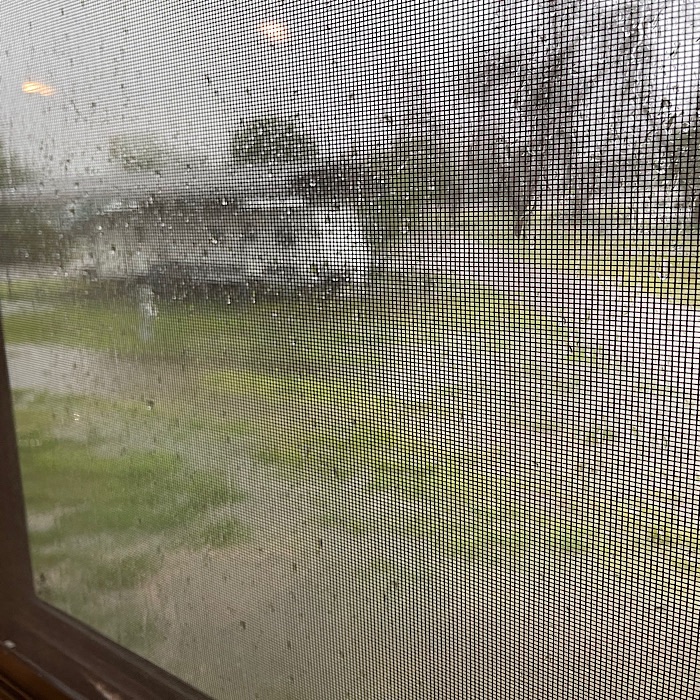
After the rain let up, we crossed the highway to see Lake Chicot. It was up over the bulkheads.

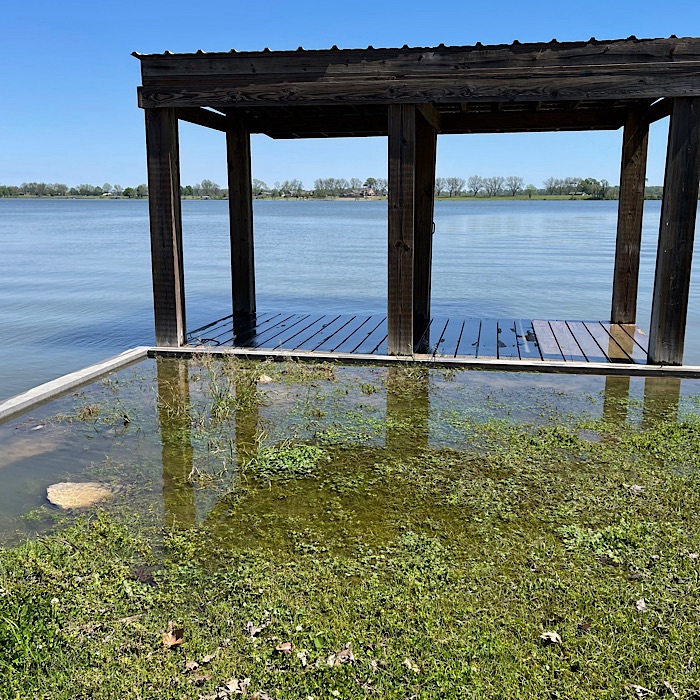

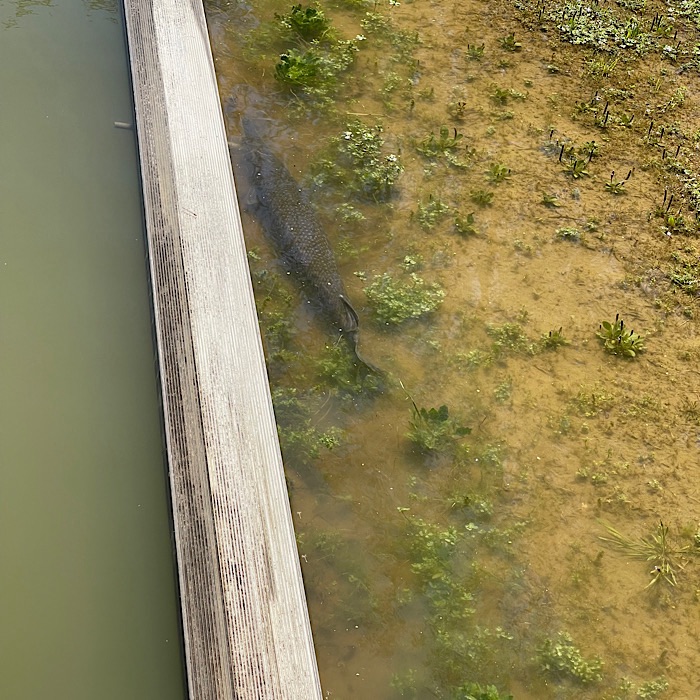
We walked out along the pier and when we came back, there was a loud splash under the pier on the flooded side. This is what we saw!


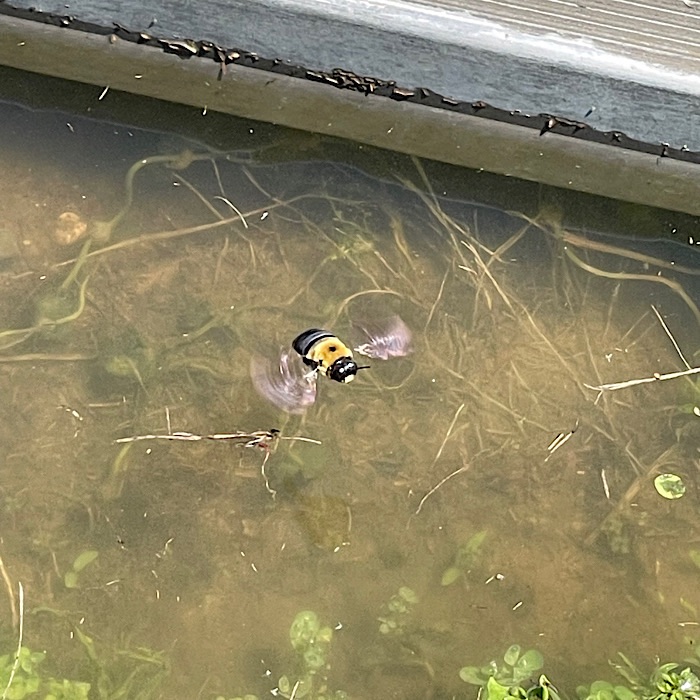
As we were walking back to the RV, I noticed this bumblebee next to to the water.

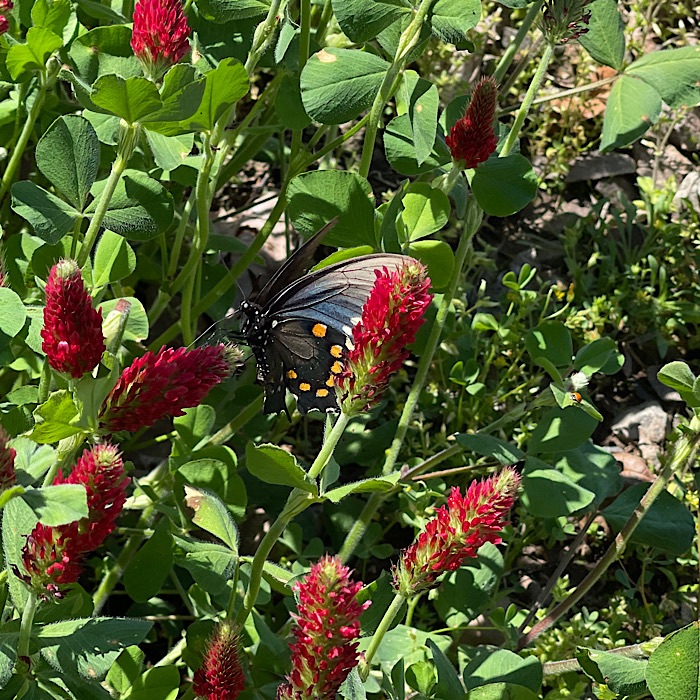
Along side the road, the red clover was blooming.

The gar was the most exciting wildlife we saw on our walk.

 Blackberry Homestead
Love that red clover! If the bee wasn’t careful, he could have been dinner for the gar. Do they usually get that big? I wonder if he will make it back into the lake.
LikeLiked by 1 person
We herded the gar along the bulkhead to where the bulkhead ended and got the gar back into the lake. Gars get up to “a length over 2 m (6.5 ft) and a weight over 45 kg (100 lb) and specimens of up to 3 m (9.8 ft) in length have been reported.”
LikeLiked by 1 person
I don’t guess I have ever seen a gar that I know of; I had no idea they could get that big. Thanks for being a helper and getting it herded back into the lake. Let’s hope he doesn’t jump out of the lake again!
LikeLiked by 1 person
We went back later and the water had dried up behind the bulkhead. We didn’t see any fish remains, so we think he stayed in the lake, at least for now.
LikeLike
A gar?!? What on earth are they? I’ve never seen one before. Heck, I’ve never seen red clover either. Around here, we only have white. What an adventure I’m on with you!
LikeLiked by 1 person
“Gars are an ancient group of ray-finned fish in the family Lepisosteidae. They comprise seven living species of fish in two genera that inhabit fresh, brackish, and occasionally marine waters of eastern North America, Central America and Cuba in the Caribbean,[1][2] though extinct members of the family were more widespread. They are the only surviving members of the Ginglymodi, a clade of fish which first appeared during the Triassic, over 240 million years ago, and are one of only two surviving groups of holosteian fish, alongside the bowfins, which have a similar distribution.[3]” from Wikipedia
Red clover is very common in the South. It is planted along roads and my dad grew it for his cows.
LikeLiked by 1 person
Wow. Can you eat gar? They aren’t very attractive.
LikeLiked by 1 person
Yes, you can eat them, but the roe is toxic. Also “The hard ganoid scales of gars are sometimes used to make jewelry whereas the tough skin is used to make such items as lamp shades. Historically, Native Americans used gar scales as arrowheads, native Caribbeans used the skin for breastplates, and early American pioneers covered the blades of their plows with gar skin.[58] It is suspected that gars have an unusually strong DNA repair apparatus. If confirmed by further studies, it could be used in medical treatments against human diseases like cancer.[59]” – Wikipedia
LikeLiked by 1 person
Woo hoo! Wouldn’t it be great if we could learn from them?
LikeLiked by 1 person
It would be great! While I think they are an ugly fish, I also love the idea of them being a living fossil. If they can help cure cancer, it would be amazing!
LikeLiked by 1 person
Wow I’ve never seen a gar in real life but my brothers used to always tease me that they were swimming in our lake close by. CREEPY!
LikeLiked by 1 person
They are a very primitive fish going back to Triassic period, 240 million years ago. No wonder they look a bit scary!
LikeLike